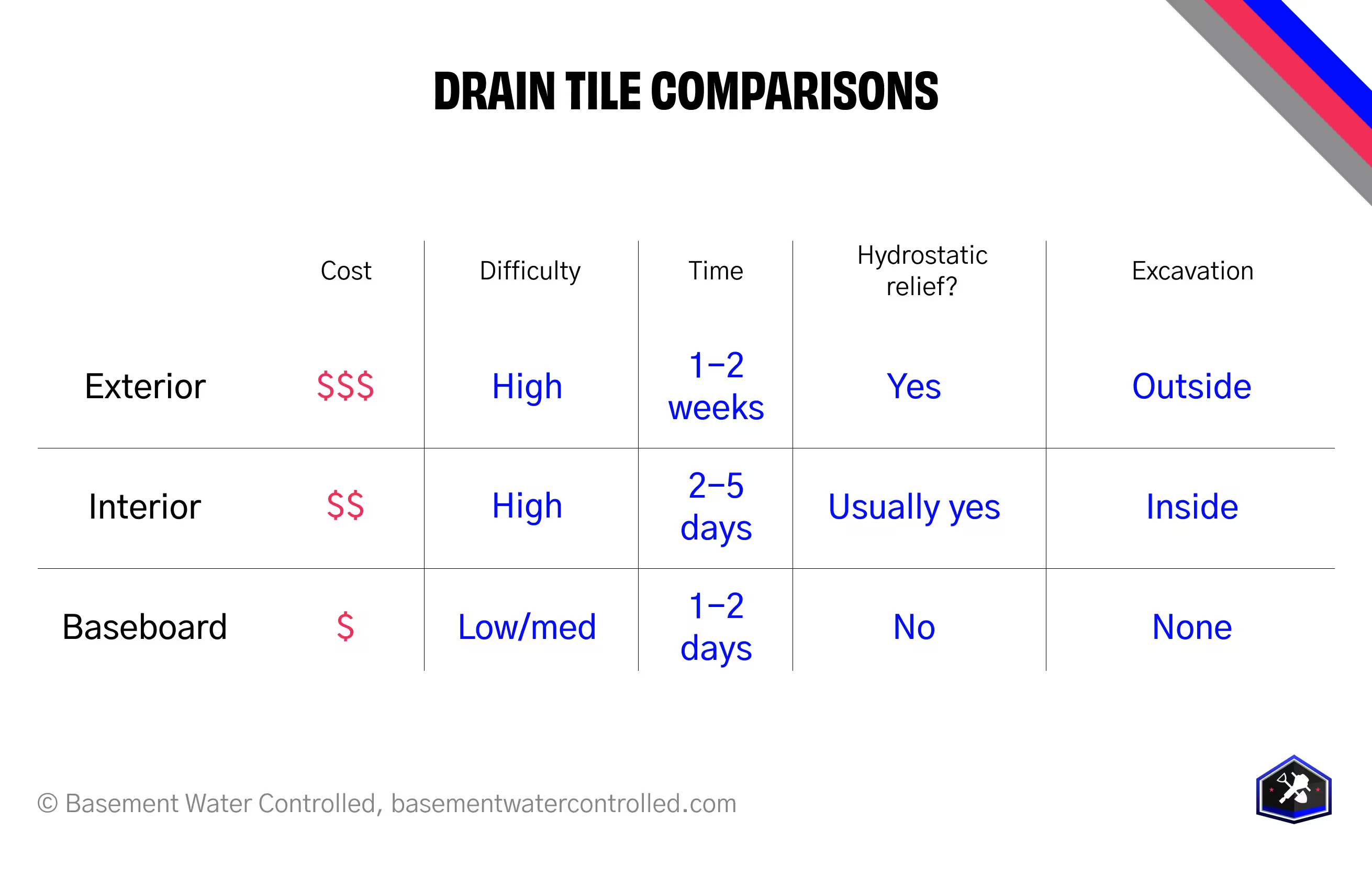
What are the main drain tile solutions?
The 3 solutions we'll look at are:
- Exterior
- Interior
- Baseboard
Exterior drain tile
The exterior drain tile system is usually installed during the construction process.
It is installed alongside the exterior of the foundation and keeps water from entering.
This system is a great preventative measure, but it's not always feasible after construction, as it oftentimes requires heavy equipment for excavation.
- Installed outside the foundation
- Oftentimes most effective, but not always cheap
- Flows to a sump pump or a daylight outlet
Interior drain tile
There are several different options for interior drain tile. Let's take a look at each of these.
Each waterproofing company offers a slightly different solution for drain tile. Below are a few of our legendary drain tile solutions.
UG-18
The UG-18 drain tile system is for medium-sized water issues caused by water coming in through the wall or floor.
It handles hydrostatic pressure well and channels water toward a sump pump.
- Interior excavation required
- Covered with concrete after installation
- 18" wide
UG-24
The UG-24 is similar to the UG-18 in that it handles wall leakage as well as floor leakage.
The key difference is that the UG-24 is 6 inches wider than the UG-18, so it can handle extreme water problems.
This system is common for houses near lakes and rivers.
- Interior excavation required
- Beast of a system
- 24" wide
Edge drain tile
The edge drain tile system is used mostly for when water is coming through the wall of a basement.
It does not handle hydrostatic pressure as well, but it channels water entering through concrete blocks to be channeled to a sump pump.
Here is an example of an edge system:
Baseboard
The baseboard is a unique system that does not require excavation and is typically the cheapest option.
A baseboard-like system is installed along the floor and wall joint (cove joint seepage), and channels water away.
These are typically used in smaller leakage situations.